BMW Patents Truly Bizarre Noise-Generating System For EVs And Hybrids
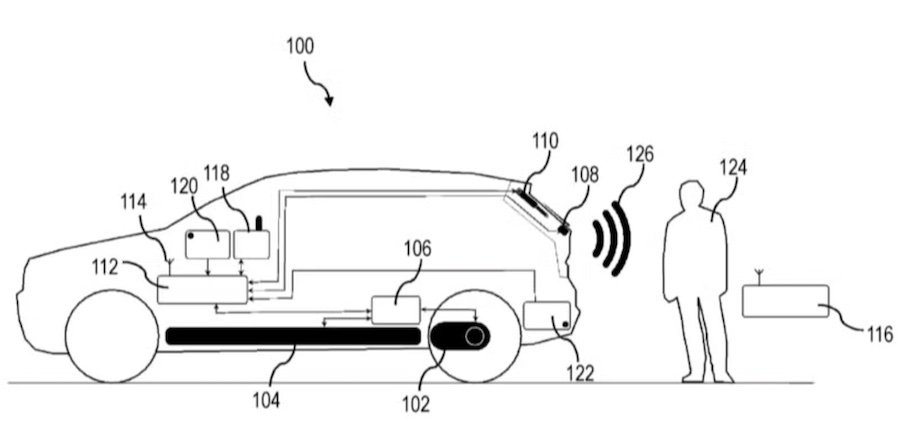
Even normal internal combustion cars often have a speaker or two hidden somewhere to emit various beeps to alert you to whether the car has been locked or if a power door is opening or closing. Automakers have been doing this for years, and it would almost seem like a solved problem. However, some engineers at BMW seemed to be annoyed at having to add speakers, and came up with a possible alternative that we find a bit crazy.
Motors Will Make The Noises
As the BMW patent explains, having external speakers for generating noise means having to find a place to stuff a speaker. That's something that adds a bit of weight and takes up a bit of space. If you can get rid of it, you've managed to save some weight and free up some room. That's fairly sound logic, though considering how heavy and stuffed full of features the average BMW is nowadays, focusing on what are probably relatively small speakers that are generally out of the way seems like missing the forest for the trees.
Of course, these speakers are important because of what they alert people to. You want to be aware if the power tailgate is about to open into you or close on you, and you want to be able to hear the EV that's slowly approaching. In fact, some of the warnings, like the EV noises, are federally mandated safety equipment. Some automakers have even had to recall their EVs for not producing loud enough noise.
So what would make the noise instead? According to the patent, various other electric motors would. Besides the main drive motors, EVs and hybrids, like any other combustion car, have electric motors throughout to run accessories. In particular, you'll find motors running the wipers, power windows, and the aforementioned power tailgates. Hypothetically, you could actuate these motors in such a way that they could produce some noise, and the noise could be amplified with some kind of resonating surround. The patent even suggests multiple motors could be pulsed together to generate multiple frequencies and have more complicated tones. Maybe, if the car has multiple drive motors, at low speeds, one of the motors could generate some sound while the other propels the vehicle.
Many modern cars use intricate audio systems to have synthetic engine noises sent into the cabin, but this was the first vehicle to have the feature.
The whole idea reminds us a little bit of the Volkswagen Soundaktor, which was a noise generator that would electrically vibrate a weight, and because the unit was attached to part of the car, such as the firewall, it could create a low sound. At the proper speed and time, it could sound similar to the natural engine noises, and make the car have more of a growl.
It's Certainly Interesting, But We're Not Quite Convinced
Like we said, we understand how potentially eliminating a component could have benefits. However, this solution seems convoluted. Suddenly, relatively simple electric motors will have to do another task: making sound. By our understanding, it would seem that something would have to happen to keep the motor from, say, rolling down a window while making the noise. Not only that, but the motor and its surround would need to have resonators to make the sound loud enough, and that could potentially take up space in tight areas like in doors or near hinges. Meanwhile, a speaker can be placed just about anywhere, and they're not necessarily that big to begin with.
That's not to say we don't see any potential. If you could find a way to make an electric motor emit more noise just by operating, perhaps with resonators, offset weights or something else, that could presumably scale up from the little motors around a car, to the main drive motors of an EV. If that sound was pleasing, this could be a neat way to get an EV to make sounds naturally, rather than relying on contrived artificial sounds from speakers inside and out. So these BMW engineers may be onto a neat idea, just with the wrong application.
