Porsche Could Merge the Taycan and Panamera Into One Sedan
Key Points
- Porsche may merge Taycan and Panamera into one sedan line to improve profitability.
- CEO Michael Leiters proposes unifying gas, hybrid, and electric versions under a common identity to save costs.
- The name of the potential consolidated offering has not been revealed.
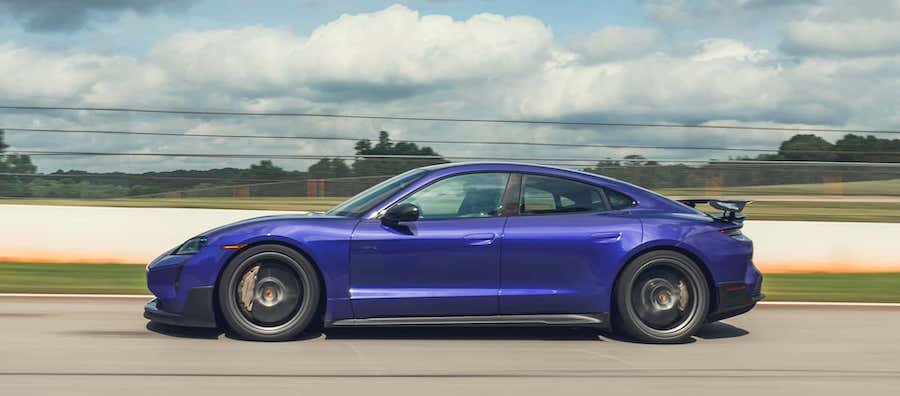
When it looked like the whole world would be enthusiastically driving all-electric vehicles by the end of the decade, it made sense for Porsche to introduce the Taycan EV as a complement to its combustion-powered Panamera, but that outlook has changed. Not only are gas-powered cars still immensely popular and the Chinese building EVs that beat just about anything European and American automakers can offer, but Porsche has been facing challenges in Asia and the rest of the world, with the automaker admitting that its business model no longer works. The solution may be to consolidate the gas and electric sedans into one product, reports Autocar. We’ve seen this page of the playbook before.
New Proposals to Save Money at Porsche
New Porsche CEO Michael Leiters has reportedly proposed unifying gas, plug-in hybrid, and fully electric sedans under a single new model line. Developing vehicles exclusively for electric powertrains is eating into profitability, and the publication’s sources have indicated that the German automaker is “exploring greater part sharing and the possibility of a common identity, even if successor versions continue to use different platforms.”
What this means is that Porsche may scrap both the Taycan and Panamera names to introduce a single new nomenclature, albeit with gas and EV variants still being produced on their own platforms. Alternatively, Porsche may keep one of the model names alive but offer the chosen nameplate in two configurations, each with unique underpinnings. It would be a similar strategy to that employed with the Cayenne, for example, which is now offered as a 1,139-horsepower EV while the combustion-powered Cayenne continues to exist.
Why Merging Porsche’s Taycan and Panamera Makes Sense
The two executive sedans are already very similar in size, with the gas Panamera’s wheelbase measuring 116.1 inches in length and the electric Taycan’s just two inches shorter. This slight difference would not immediately be apparent to buyers inspecting each option on the dealer floor, and offering two powertrain types under one name makes styling and marketing easier, giving buyers a less confusing choice while saving Porsche money across multiple departments, something Stuttgart needs right now. This is also why the Mercedes EQS has been canned in favor of a new electric S-Class; buyers exploring EVs for the first time would appreciate the familiarity of a typically gas-powered nameplate they’ve come to know and trust.
The alternative could be to permanently ax either Taycan or Panamera, and after the whole Macan fiasco, that’s a risk not worth taking. For those not in the know, Porsche canceled the gas Macan in favor of an EV, only to discover that buyers of its best-seller were not pleased, forcing the development of a new gas crossover that won’t wear the Macan badge.
Related News
