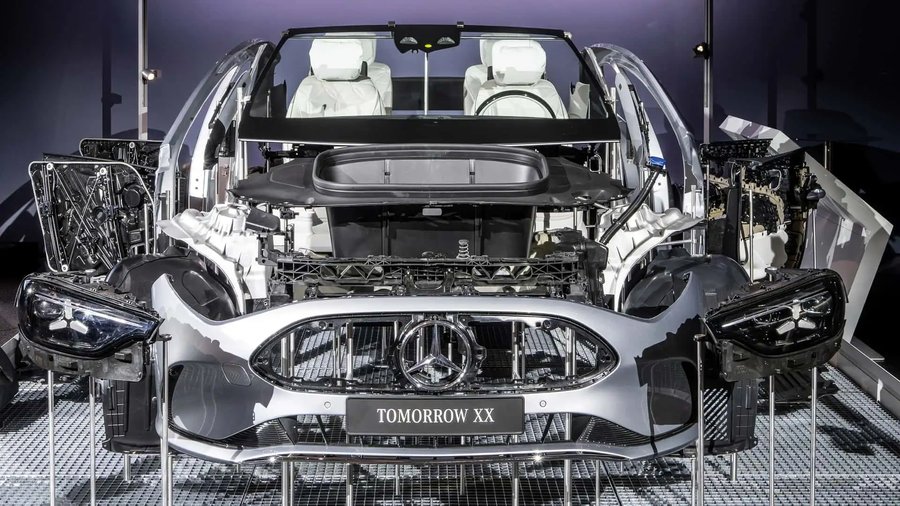
Mercedes-Benz is rethinking how it bolts its cars together, and the change starts in places you would not normally notice. As part of a new circularity program, the company is redesigning components so they can be taken apart and repaired instead of being glued into a single throwaway unit.
Headlights, interior panels and plastic trim are all being reworked to use screws, reversible fasteners and mono-material parts, with the goal of improving long-term quality while cutting embedded CO2.
Headlights That Can be Opened, Not Binned
Modern LED headlights are some of the most expensive parts on a car, in part because they are built as sealed assemblies. The lens, housing, trim and electronics are bonded together with permanent adhesives, which is good for watertightness but bad for repairability. If a stone cracks the lens, owners often end up paying for a complete unit rather than a simple cover.
Under the new approach, Mercedes is designing future lamps to be screwed together instead of glued. The lens and housing are held by mechanical fasteners, and internal modules are laid out so technicians can remove the front cover, swap a damaged lens or failed control unit and then reseal the headlight. On the sustainability side, the company is pushing for each major piece to be a single type of plastic, which makes sorting and recycling far easier when the car is finally scrapped. The brand says that could almost double the share of recycled material in a headlamp and cut the component’s CO2 footprint by around half, without changing its basic function.
Interior Panels and Plastics Built for a Second Life
The “screws not glue” idea extends into the cabin. Interior door panels that were previously welded or bonded into a single lump are being redesigned with reversible plastic rivets and clips so that fabric, foam and backing boards can be separated again. New “mono-sandwich” PET parts use recycled plastic in a layered structure that is lighter than conventional trim but can still be recycled as PET at the end of its life. Other components, such as washer tanks and underbody panels, are shifting toward higher recycled content and simpler material mixes.
There is also experimentation with unusual feedstocks. Mercedes is already trialing plastics derived from old tires and airbag housings for parts like synthetic leather surfaces, engine mounts and brackets. The idea is that the same cars that benefit from better repairability today can eventually feed the raw materials for later generations, instead of being shredded into mixed waste that is hard to reuse.
Quality, Tech and the Long Game
For owners, the immediate upside is about making expensive parts less disposable. A headlight that can be opened and serviced should last longer and cost less to keep on the road, which matters more as cars load up with sensors, LED modules and complex light signatures. It fits with the way Mercedes is trying to frame its next wave of products as both more high-tech and more durable, from entry models like the new CLA to top-end sedans.
The company is increasingly relying on software and updates to make existing cars last longer. In the physical world, they’re also focusing on mechanical changes like screw-together headlights and reversible trim. These efforts aim to keep cars in tip-top shape for longer and cut down on the amount of hardware that needs to be discarded when just one part goes kaput.
